The Honor System is Dead (and We Killed It)
For years, the Apple Education Store was the internet’s worst-kept secret. It was a magical place where a “student” was anyone with a functioning mouse finger and a slightly flexible conscience. You’d click that little link at the bottom of the homepage, agree that you were totally, definitely enrolled in a higher-learning institution, and—boom—instant savings. No ID required, no transcript requested. It was the digital equivalent of wearing a backpack and looking stressed to get a discount at a local pizza joint.
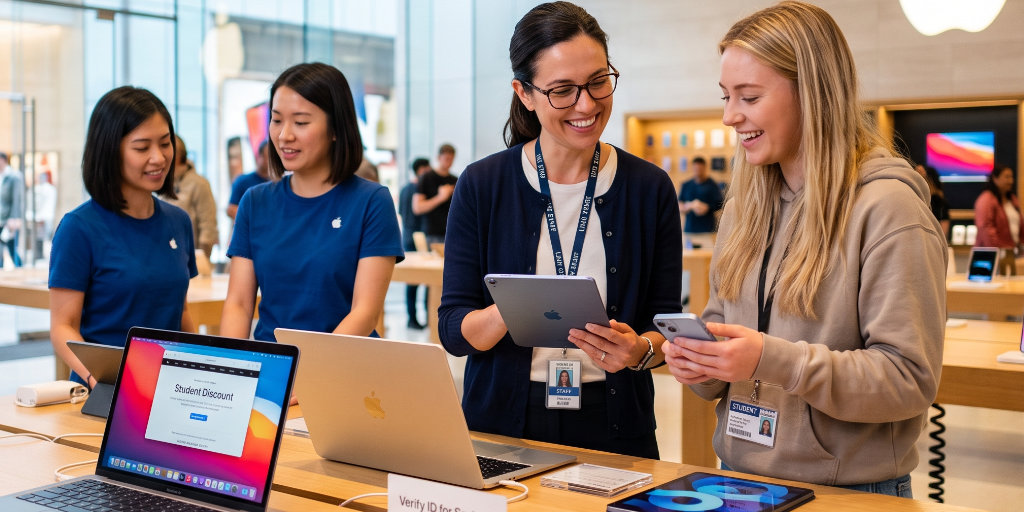
But alas, the golden age of “honor-system” savings has officially entered the tech graveyard. Apple has finally pulled the plug on our collective white lies, implementing a mandatory verification system through UNiDAYS. The free ride hasn’t just slowed down; it’s hit a high-resolution, retina-display brick wall.
Enter the UNiDAYS Inquisitors
If you haven’t met UNiDAYS yet, think of them as the bouncers of the student discount world. They don’t care about your “vibes” or your “commitment to lifelong learning.” They want cold, hard proof. To get those sweet, sweet Mac and iPad discounts now, you have to verify your status using a legitimate university email address or official documentation.
This move shifts Apple away from a casual “trust but don’t verify” model to a strict, data-driven gatekeeping strategy. For actual students and teachers, it’s a minor hurdle. For the rest of us—the “graduated in 2012 but still feel like a student at heart” crowd—it’s a tragic end to our favorite loophole. It’s like Apple looked at its bottom line and realized that half the “freshmen” buying MacBook Pros were actually 35-year-old software engineers who just liked the $200 discount.
Why Now? The Insightful Bit
So, why the sudden crackdown? Beyond the obvious “they want more of your money” reason, it’s about control and data. By outsourcing verification to UNiDAYS, Apple simplifies its own overhead while ensuring its “Education” segment reflects actual education sales. It also streamlines the process across different regions, making the “Back to School” promotions more exclusive—and therefore more effective as a marketing tool.
It also reflects a broader trend in the subscription economy. From Netflix’s password-sharing crackdown to the end of unlimited “free” tiers elsewhere, the walls are closing in on digital generosity. Companies are no longer content with “good enough” metrics; they want verified, monetizable user bases. In the eyes of Cupertino, if you aren’t currently pulling an all-nighter in a library, you’re officially a “Pro” and should pay Pro prices.
The Verdict: Pour One Out for the Loophole
The Galactigeek verdict? It was a good run while it lasted. We enjoyed the thrill of the “Education Store” click, that brief moment of feeling like we’d outsmarted the trillion-dollar fruit company. But the party is over. If you want that discount now, you better hope you still have access to your .edu email—or find a very generous younger cousin. For everyone else, it’s time to face the music and pay full price. At least we still have our blurry 2019 brunch photos to keep us company in the high-rent district.