
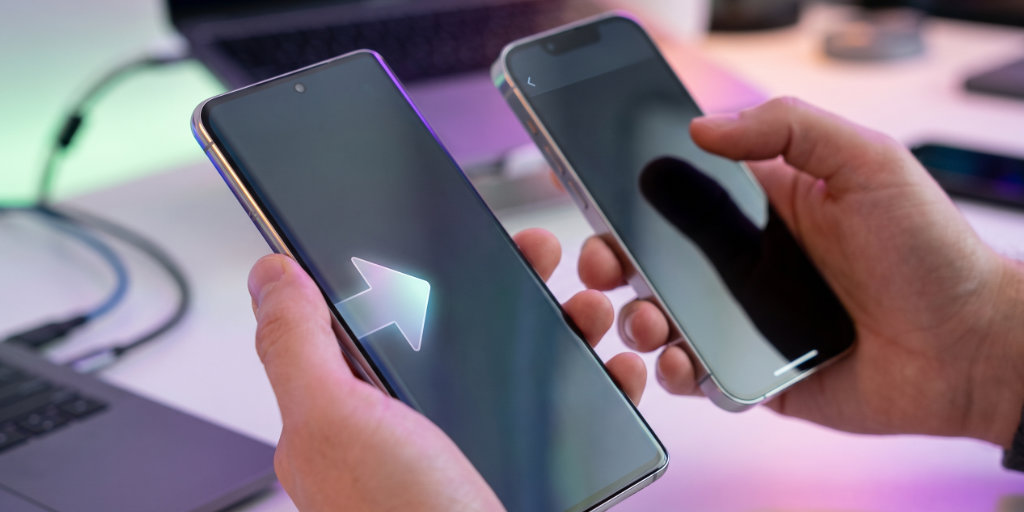
The Siren Song of the Shiny Fruit
Every few years, it happens. I see a new iPhone commercial with its buttery-smooth transitions, its titanium edges that could probably withstand a reentry into the atmosphere, and that ecosystem that ties everything together like a digital warm hug. I think to myself, “maybe it’s time. Maybe it’s time to stop being the ‘green bubble’ pariah and join the civilized world.”
I go to the store. I hold the device. I admire the Haptic Touch. And then, I try to actually use it. Within thirty seconds, I am hit with a wave of navigational claustrophobia so intense it makes me want to hurl the $1,100 glass sandwich across the room. The reason isn’t the lack of sideloading, or the file management system that feels like it was designed by someone who has never seen a folder. It’s something much dumber: the missing universal ‘back’ gesture.
The Left-Side Tyranny
On Android, the back gesture is a fundamental law of physics. Swipe from the left edge? Back. Swipe from the right edge? Also back. It doesn’t matter if you’re in a browser, a deep settings menu, or a shady app that generates memes of cats in Napoleonic garb. It always works. It is the ‘undo’ button for your life, and it is accessible from anywhere your thumb happens to be resting.
iOS, however, treats the concept of “going back” as a mere suggestion—a feature that app developers can choose to implement if they feel like it, usually restricted to a left-edge swipe. If you’re a right-handed user with a Pro Max model, trying to trigger that swipe is like trying to play a one-handed game of Twister. Your thumb has to perform a feat of gymnastics that would make an Olympian weep just to reach the opposite side of the screen.
The Navigation Friction Hunt
But wait, it gets worse! Sometimes the swipe doesn’t work at all. Sometimes you have to hunt for a tiny, microscopic “X” in the top-left corner. Other times, it’s a “Done” button in the top-right. Using an iPhone feels like playing a digital version of ‘Where’s Waldo?’ except instead of a man in a striped shirt, you’re looking for a way to leave a menu without throwing your phone into a lake.
This lack of consistency introduces a constant, low-level ‘navigation friction.’ On Android, I navigate with muscle memory. On an iPhone, I have to stop and think: “Okay, how do I get out of this specific room?” It turns every interaction into a tiny cognitive puzzle. It’s like living in a house where every door has a different type of handle, and some of them require a secret password.
The Verdict: Muscle Memory is a Harsh Mistress
People tell me, “You’ll get used to it!” but why should I? We’re talking about the most basic interaction of a handheld device. Apple is the king of “It Just Works,” yet their core navigation is a chaotic mess of “It Works If You Can Reach It.”
So, until Tim Cook decides that right-handed people deserve a back gesture too, I’ll be over here with my Google Pixel, swiping from wherever the heck I want. My bubbles might be green, but at least my thumb isn’t in a cast.