
The M-Word Strikes Back
Remember the “Metaverse”? Of course you do. It’s that word that spent most of 2022 being yelled at you by CEOs in expensive hoodies, promising a digital utopia that mostly manifested as legless avatars trying to sell you virtual real estate. It was a hype-train that derailed so hard it left a crater in the tech industry’s collective dignity. But while we were all busy rolling our eyes and retreating back to our physical living rooms, Tim Sweeney and the folks at Epic Games were quietly sharpening their tools.
Enter Unreal Engine 6 (UE6). Epic isn’t just making another incremental update to their industry-dominating engine; they’re trying to build the connective tissue for a “metaverse” that—dare we say it—might actually be useful. But don’t worry, there isn’t a pair of sweaty VR goggles in sight. This isn’t about living in a low-poly simulation; it’s about the plumbing of the gaming internet.
Plumbing for the Digital Multiverse
The core ambitious goal of UE6 is interoperability. Right now, every game is a walled garden. Your cool sword in Fortnite doesn’t exist in Rocket League, and your custom avatar in a niche indie RPG is trapped in that specific piece of code forever. It’s like having a library of books where every book is written in a different, unique language that only works within its own covers.
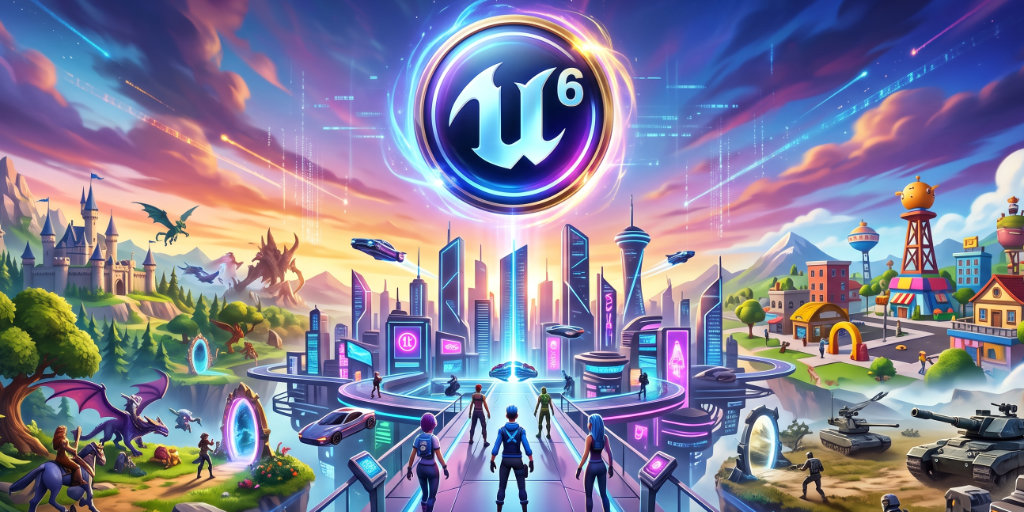
UE6 aims to change this by integrating new standards that allow assets, logic, and identities to flow between experiences. Epic’s vision is a world where millions of players can jump between a Disney-themed social hub, a competitive shooter, and a high-fidelity racing sim, all while maintaining a consistent digital presence. It’s less “Cyberpunk dystopia” and more “harmonized digital logistics.” They want to create a common language for 3D content so that the “gaming internet” feels like one cohesive universe rather than a series of isolated islands.
Legitimate Evolution or Just More Hype?
It’s easy to be skeptical. We’ve been burned by the “M-word” before. But there’s a fundamental difference here. The previous metaverse hype was a solution in search of a problem. Epic, however, is tackling a very real problem: the massive, soul-crushing complexity of modern game development and cross-platform connectivity.
By building these standards into the engine itself, they are making it easier for developers to create persistent, shared experiences without having to reinvent the wheel every time. It’s about creating a “persistent state” for the internet. Imagine a world where your digital achievements or assets actually have a life outside of a single title. It’s a technical ambition that makes the “avatar in a virtual boardroom” look like kindergarten finger painting.
The Verdict: Keep Your Eyes on the Tech, Not the Buzzword
Will we all be living in UE6 in five years? Probably not. But the shift toward interoperability and shared standards is a legitimate evolution in how we interact with digital media. Epic is betting big that the “metaverse” isn’t a destination, but a protocol—a way for different pieces of software to talk to each other seamlessly.
So, while we might still make fun of the word “Metaverse” at parties, the underlying tech being cooked up for UE6 is actually pretty exciting. It’s the era of “clever” connectivity, where the walls between our favorite digital worlds might finally start to crumble. Just, please, Epic… no legless avatars. We’ve been through enough.