When you think of Samsung wearables, your brain probably jumps straight to the heavy hitters. Lately, Samsung has been relentlessly pushing the boundaries of their high-end wrist tech, a campaign culminating in the monstrous, titanium-clad $700 Galaxy Watch Ultra2. It has more bells and whistles than a high school marching band.
But hiding in the shadow of these premium behemoths is perhaps the least known device in Samsung’s entire smartwatch lineup. It’s an underdog, a quiet achiever, and it is wildly underrated. Enter the Galaxy Fit 3.
The Glow-Up of the Century
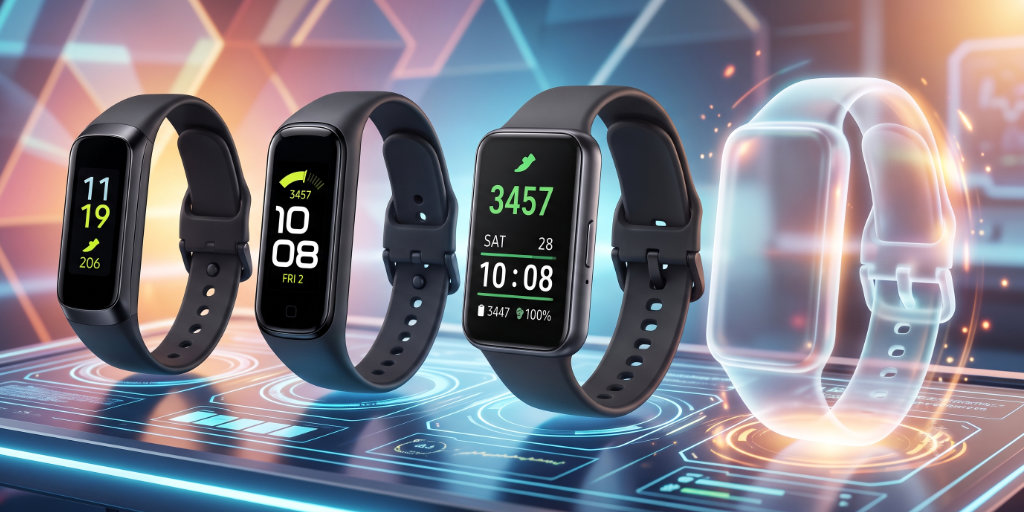
Let’s take a quick trip down memory lane. The Galaxy Fit series first graced our wrists back in June 2019, debuting as a humble, unapologetically entry-level wearable device. Back then, it was essentially a glorified pedometer with a tiny screen—useful, but not exactly turning any heads at a cocktail party. Fast forward to the 3rd generation, and Samsung decided to give this little fitness tracker the glow-up of the century.
The Galaxy Fit 3 was completely redesigned into a sleek, rectangular piece of tech that, at a passing glance, looks suspiciously like an Apple Watch. But the real kicker isn’t just the snazzy new aesthetic; it’s the sheer value proposition. This thing punches so far above its weight class it should be investigated for doping. For a device that can be snatched up for about $40, it offers an experience that feels shockingly premium.
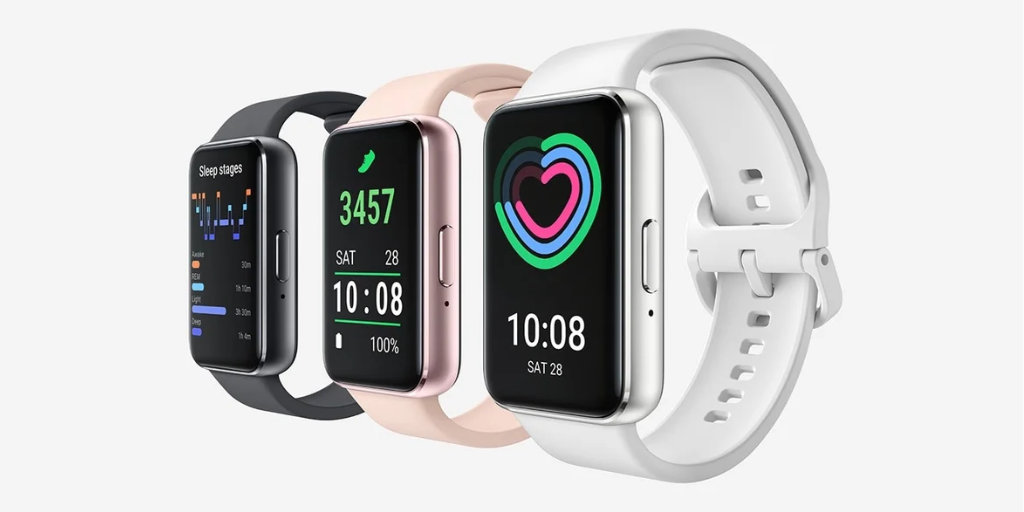
By looks alone, you’d be hard pressed to believe that the Galaxy Fit 3 costs less than $300
Sometimes less is more
It is incredibly easy to turn up your nose at the word “budget” in the tech world. Usually, it’s just industry code for “will frustrate you until you throw it out a window.” However, the Galaxy Fit 3 manages to be an incredibly attractive option precisely because it leans into its identity as a budget device.
Under the hood, the Fit 3 runs on unabashedly low-spec hardware and operates on a trimmed-down, lightweight operating system called FreeRTOS. You won’t find built-in GPS for mapping your wilderness hikes, and it utterly lacks features like Bluetooth audio streaming for your gym playlists. But here is the secret: it actually does most of the things you genuinely want your wearable to do on a daily basis, and it does them with zero stutter. Because it isn’t wasting juice on a heavy OS and power-hungry sensors you barely use, the battery life is absolutely bonkers. We are talking well over 10 days between charge cycles. Try doing that with a $700 smartwatch.
Everything you want, and nothing else
So, what exactly can you do with a Galaxy Fit 3? Pretty much all the essentials you actually care about. You can easily set your daily alarms and timers without having to dig your phone out of your pocket. You get seamless, reliable notifications for incoming calls and texts, complete with the ability to send quick, pre-canned replies to let your boss know you’re running late.
From a health and fitness standpoint, it completely covers all the bases. You can count your steps, track your sleep, and continuously measure your heart rate. You can even do something that the almighty Apple Watch literally doesn’t do anymore: measure your blood O2 levels. Take that, international patent disputes! Granted, you can’t make Dick Tracy-style voice calls directly from the watch speaker, but let’s be honest with ourselves… who even does that anyway? You usually just end up looking like you’re aggressively yelling at your sleeve in the grocery store aisle. Why pay 10x the price for a handful of gimmick features that you only use occasionally to show off to your friends?
The Case for the Fit 4
This brings me to my ultimate plea: Samsung needs to continue the Galaxy Fit series. The current wearable market is incredibly top-heavy, but not everyone needs a cutting-edge, military-grade dive computer strapped to their wrist just to go to the office or walk the dog. Sometimes, you really just want a reliable watch that offers a few extra smart perks and boasts a battery life that doesn’t induce daily range anxiety.
If you take a quick scroll through Amazon, you will see a marketplace absolutely flooded with cheap Apple Watch clones for a comparable price. The problem? They are universally terrible—incredibly janky, shoddy, and prone to losing connection every five minutes. The Galaxy Fit 3, on the other hand, is the very first budget smartwatch I’ve ever tested that doesn’t compromise on quality or user experience. It’s a diamond in the rough-and-tumble world of cheap wearables, and I really hope to see a Galaxy Fit 4 in the near future.