
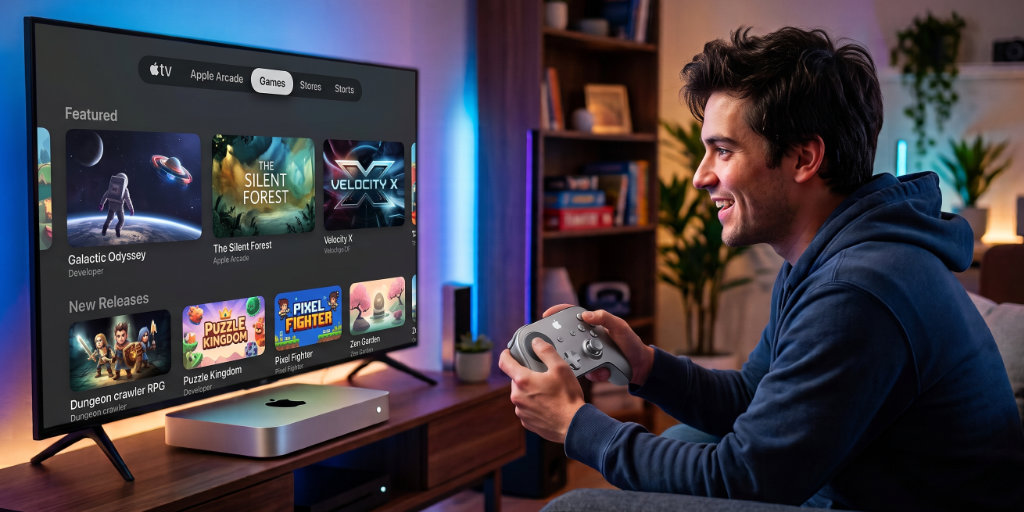
If there’s one tech behemoth that has historically treated gaming like a weird cousin you only invite to weddings out of sheer obligation, it’s Apple. For decades, the company’s relationship with the gaming industry has been a bit… complicated. Sure, they have always maintained some level of presence in the gaming space—mostly through the casual swiping of mobile gamers—but they’ve never quite fully committed to the living room couch experience.
However, the industry landscape is shifting beneath our feet. With games becoming more seamlessly cross-platform than ever before, the stars might finally be aligning for Cupertino. The question on every tech nerd’s mind isn’t just whether Apple could finally create a dedicated gaming device, but whether this is the most viable time in history for them to actually do it. Welcome back to Galactigeek, where today we are breaking down the console that doesn’t exist (yet).
A Trip Down Memory Lane
Apple’s modern-day efforts in the hardcore gaming sphere have seemed incredibly lethargic lately, but believe it or not, that wasn’t always the case. There was an era where Apple aggressively courted the mountain-dew-chugging gamer crowd. Need proof? Look no further than Halo. Before Master Chief became the green-armored mascot of the Xbox brand, Halo originally began its development as a Mac-exclusive follow-up to Bungie’s cult-classic shooter Marathon.
And let’s not forget the time legendary programmer John Carmack confidently took the stage at a Macworld event to personally introduce Doom 3. Apple even created a bonafide gaming console of sorts back in the ‘90s. The ill-fated Pippin, co-developed with Bandai, was a beige plastic testament to Apple’s early living-room ambitions. Sure, it flopped harder than a fish on dry land, but it proves that an Apple-branded gaming device wouldn’t be entirely unprecedented. They’ve had the itch before; they just need the right scratch.
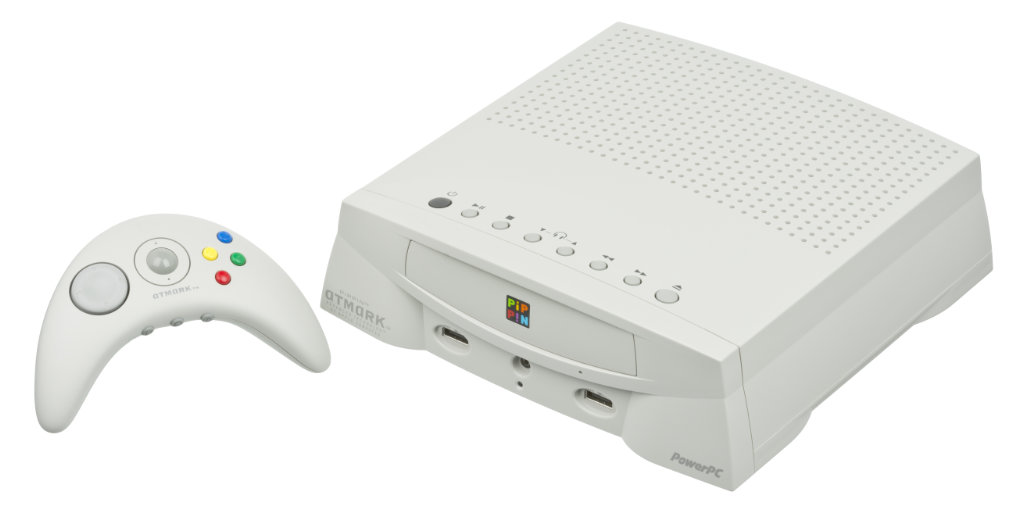
Does anyone remember the Apple Pippin? Man, the Jobs-less era of Apple was truly bizarre.
All the Pieces of the Apple Pie
So, could they pull it off today? Technically speaking, all the pieces are already scattered on the board. Enter Apple Silicon. By transitioning to their own custom chips, Apple has created a unified hardware platform that effortlessly scales from the phone in your pocket all the way up to monstrous workstation desktops. The latest iPhone devices are already flexing their muscles by running AAA titles like Death Stranding and the Resident Evil franchise (4, 7, and 8) natively. If a glass slab in your pocket can handle that kind of heavy lifting, Apple could certainly create a device that performs exceptionally well for gaming. Honestly, a scaled-up Apple TV with some robust active cooling would be all it takes to run most modern AAA games smoothly.
Furthermore, Apple already boasts a pretty solid, family-friendly games catalog by way of Apple Arcade. But the real magic sauce? The Game Porting Toolkit. While Apple currently positions this as a developer tool designed to translate Windows DirectX calls to their native Metal API, it’s effectively acting like Valve’s Proton—the exact same translation technology that allowed the Steam Deck to be so wildly successful. Unlocking the vast PC catalog of existing games via this emulation-like tool may just be the magic bullet Apple needs to make a new dedicated gaming device instantly viable.
To Play or Not to Play: The Strategic Dilemma
The tech is ready, but would it actually be in Apple’s best interest to launch a console right now? The current gaming industry is experiencing a severe drought, plagued by hardware price increases, studio closures, and massive layoffs. Entering the console market right now would be incredibly volatile. On one hand, swooping in to disrupt a struggling market could be a remarkably smart strategic move. On the other hand, it could be a complete disaster.
The primary issue is that companies in the console market don’t typically make their money from the hardware itself; they make their billions on software licensing and digital storefront cuts. It’s always a grueling “chicken and egg” problem to get developers onto a brand-new platform. Apple may have a massive foot in the door thanks to the ubiquitous iOS ecosystem, but there’s a catch. If they rely on their Game Porting Toolkit’s Windows emulation technology to supply the games, they would inherently be forgoing any profit sharing, since those games would need to be acquired outside of the walled Apple ecosystem (like Steam or Epic). That’s a tough pill for a company that loves its standard 30% cut.
Overall, I don’t expect Apple to suddenly drop a dedicated gaming device tomorrow. But looking at the board, the pieces are undeniably lining up, and it soon may become inevitable to see an “Apple Play” device sitting proudly in your living room.