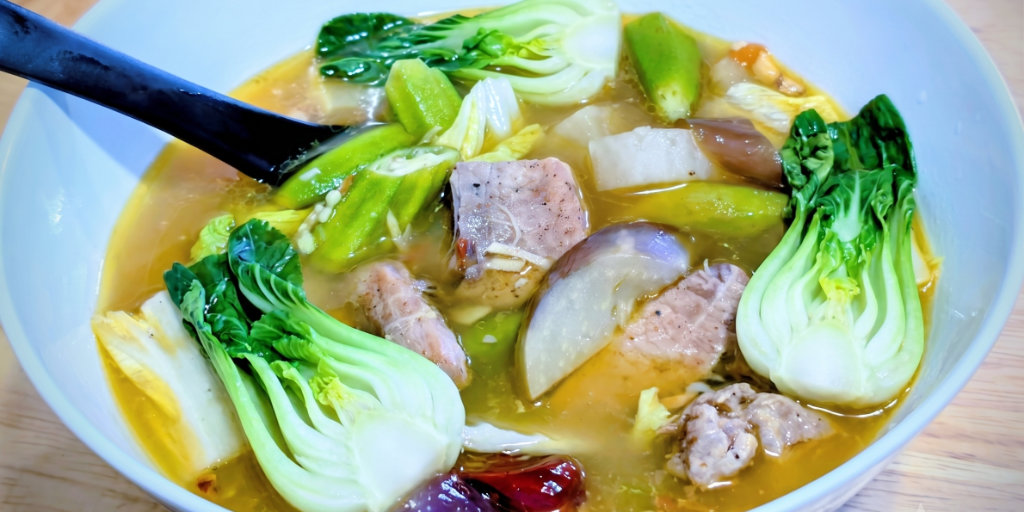
Sinigang is a traditional Filipino soup that is characterized by a sour and savory broth.
Sinigang can use a variety of fish and seafood ingredients, but I enjoy making it with pork, because the long simmering time means it work great with “cheap” cuts of meat like ribs and shoulder.
Yield: 6 – 8 servings
Tools
Chopping board
Knife
Large frying pan
8 qt or larger stock pot
Rice cooker
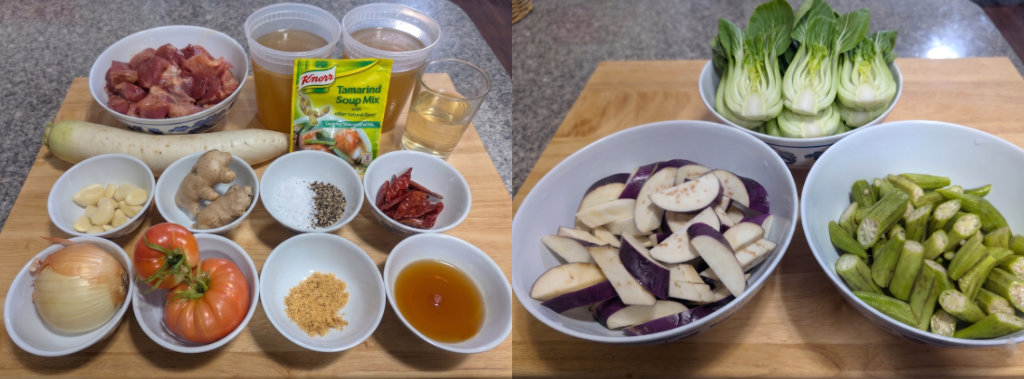
Ingredients
Phase 1
2½ lbs pork (shoulder, belly, ribs, or similar cut)
2 tbsp neutral cooking oil
1 medium onion
1 head garlic
2 thumbs ginger
2 medium tomatoes
1 cup white or rice wine (optional)
2 quarts water or chicken/pork stock
1 40 oz packet of sinigang (tamarind) soup mix (or use ½ cup tamarind paste + ¼ cup lemon juice)
1 tbsp chicken bullion powder
1 tbsp fish sauce
Salt and pepper to taste
Dried chili peppers (optional)
1 medium (about 10 inch length, 1½ inch diameter) Japanese daikon radish
Phase 2
2 Japanese, Chinese, or Filipino style eggplants
1 lbs okra
1½ lbs green leafy vegetable (such as baby bok choy, napa cabbage, spinach)
Optional: additional vegetables such as green beans, shishito peppers, Korean chili peppers, etc.
White rice
Directions
Phase 1
Cut the pork into 1½ inch cubes and marinate with salt and pepper. Refrigerate for at least an hour.
Peel and cut the onions into thin slivers (cut pole to pole), dice the tomato into ½ inch cubes, roughly dice the garlic. Peel the ginger and cut into small matchsticks. Cut the okra into 1 inch wedges.
Preheat frying pan and add cooking oil. Fry the pork until it’s lightly browned on both sides. Transfer pork to stock pot, leave the oil and pork grease on the pan.
Add the onions, garlic, ginger and dried chilis (if using) to the frying pan. Cook until onions begin to turn translucent. Deglaze with wine (or water), then cook down for a couple of minutes to evaporate some of the alcohol, transfer contents of frying pan to stockpot.
Add water or chicken/pork stock to stockpot, and add the chicken bouillon powder, and fish sauce.
Add the sinigang powder to the pot. You can use ½ to ¾ of the 40 oz packet instead of the whole amount if you want a less sour broth. If you would like to use tamarind paste instead, dissolve it in a few cups of hot water and ¼ of lemon juice first, then strain through a fine mesh strainer into the stock pot.
Bring to a boil then reduce to a low simmer. Cook for about 1½ to 2 hours. Add the chopped daikon half way through simmering.
Phase 2
Cook the white rice according to your cooker’s instructions.
Roughly chop the remaining ingredients and add them in order of how long they take to cook through. Eggplants should be added first, along with green beans and peppers (if using). Okra should go in next, and leafy green vegetables should be added only a few minutes before you’re finished cooking. Add a little extra water or stock if there’s not enough to submerge all the ingredients.
Sample the broth and season with salt to taste. Serve immediately with white rice on the side.
Modifications
- Try using different types of meat. Fish and shrimp are commonly used in place of pork (they will require much less simmering time than pork, adjust cooking time as needed).
- You can use most types of vegetables, just time their addition according to their cooking time.
- The “sour” ingredient that you use can be swapped. Traditional varieties of sinigang use ingredients such as unripe mango, guava, lime, or rice vinegar.