
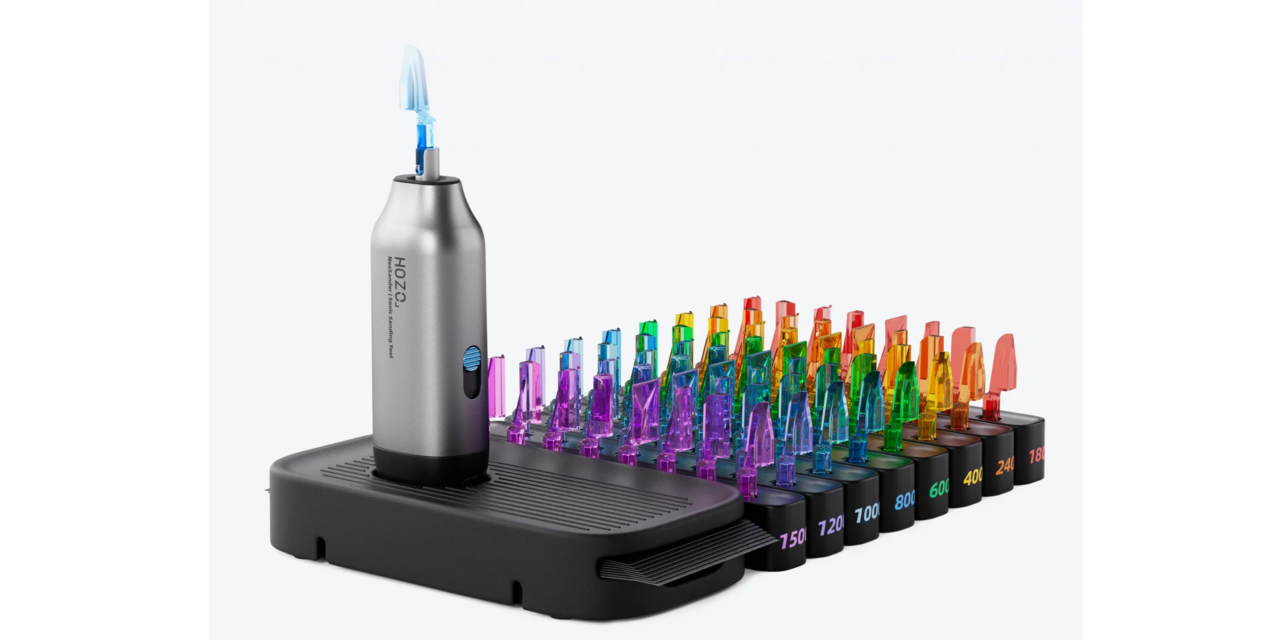
The Hozo Neosander arrived on the scene with a lot of advertisements. I saw this device in many places even while it was still in its Kickstarter phase. Positioned as a hybrid precision sander and micro‑cutter, it promised to streamline cleanup, refinement, and post‑processing for resin and FDM prints alike. I felt like it was a combination of some of the other tools available and something worth checking out.
Specs & Internal Hardware: Small Tool, Serious Ambition
The Neosander’s design centers around compact power and modularity. Its core hardware includes:
- A high‑RPM micro motor capable of delivering consistent speed for both sanding and cutting attachments. While not industrial‑grade, it’s surprisingly strong for its size.
- Interchangeable heads for sanding pads and micro‑blades, each locking into a reinforced internal mount that keeps wobble to a minimum.
- A lightweight internal frame that reduces vibration and keeps the tool stable during delicate work.
- A slim battery module designed for quick charging and moderate runtime—enough for typical print cleanup sessions.
The engineering inside the Neosander is clearly thoughtful. It’s built to be nimble, easy to maneuver, and capable of handling the fine detail work that 3D printing often demands.
The Good
One of the Neosander’s strongest qualities is how it feels during use. The grip is comfortable, the weight is balanced, and the compact form factor makes it easy to control during precision sanding or trimming.
The accessory organization is also a highlight. The sanding papers, grits, and blades come neatly arranged, clearly labeled, and easy to swap. For anyone who likes a tidy workspace—or who frequently switches between grit levels—this is a genuinely helpful touch. It feels like a product designed by people who actually use tools like this.
The Bad
Unfortunately, not everything about the Neosander is smooth.
The Power Button
The power button is a persistent annoyance. It’s a small, squishy, inset button that requires deliberate pressure to activate. I can’t turn it on with anything other than my pinky finger or the tool for changing the heads that it came with. The only saving grace for this is the slider for the speed of the device goes from 0-100. That means that I can leave the device on and just slide the speed to 0 and it isn’t vibrating or moving it is effectively off. This isn’t perfect as the speed slider is easy to slide (which is good) but that means that while picking up the sander I have accidentally moved the speed up.
Sandpaper Adhesive Issues
The sanding sheets themselves also have a problem: the glue holding the sandpaper to the packaging backing is weak. After transitioning the sand paper sections to the tool, they held on just fine. But that means that I have a hundred small sand paper sections loose and sticking to everything but the original packaging they are supposed to.
These two issues don’t ruin the tool, but they definitely hold it back from feeling truly polished.
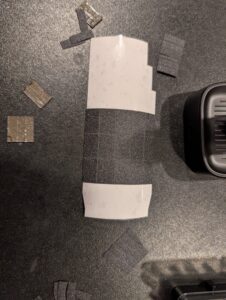
60% of the sand paper just fell off of the original sheet on every grit and every master sheet.
Cutting & Sanding Performance: Good, With Limits
The Neosander’s blade performs reasonably well for typical cleanup tasks, but it struggles when faced with clusters of heavy supports close together. It can cut them, but I had to work at it for multiple minutes for it to cut through them.
Sanding performance is similar: great for smoothing, not great for reshaping. It handles layer lines, small imperfections, and surface cleanup nicely. But if you need to remove an entire resin layer or shave down a part so it fits into another component, the Neosander doesn’t have the power or bite to do that efficiently. It’s a finishing tool, not a reshaping tool.
Final Thoughts: A Good Tool With Room to Grow
Despite its flaws, the Hozo Neosander is not a bad sander and not a bad cutter. It’s a solid companion for everyday 3D‑print cleanup, especially for detail work and surface refinement. The comfort, organization, and internal hardware show some real thought and engineering.
The weak sandpaper adhesive and the frustrating and power button are issues that need addressing, and the cutting/sanding limitations mean it won’t replace heavier tools. But for the price, and for the niche it fills, it’s good enough and I would buy it again.