If you follow the tech industry at all, you know that we basically exist in a perpetual state of “we don’t have enough chips.” From the pandemic-era console shortages where you couldn’t find a new gaming system to save your life, to the current AI-driven hardware shortages where GPUs are practically being hoarded like dragon’s gold, semiconductor supply chains are always stretched incredibly thin.
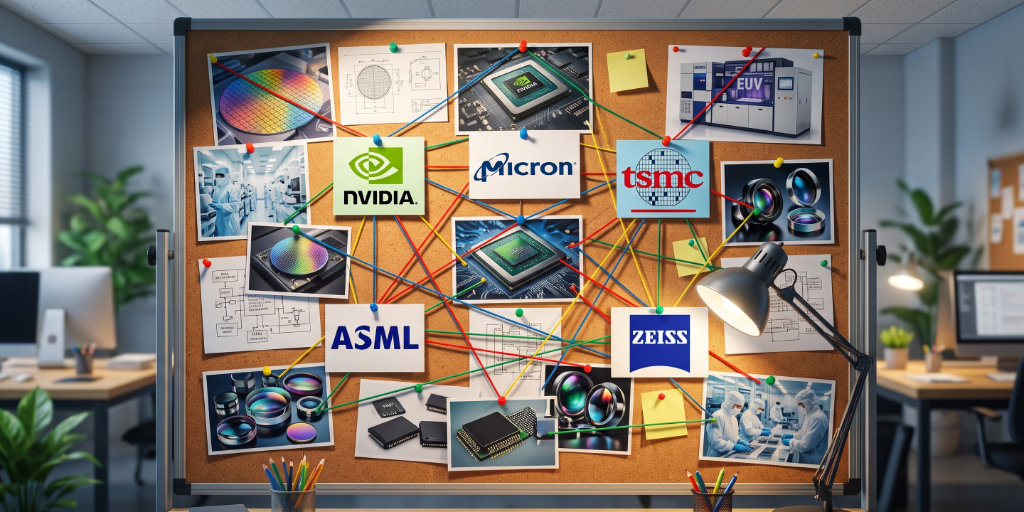
When you read the tech headlines, you see the usual suspects dominating the conversation: Nvidia, AMD, Micron, and SK Hynix. But while those household names get all the glory and the massive stock valuations, there is a secretive hierarchy of companies operating entirely behind the scenes to actually keep the global supply chain humming. If you want to understand how your electronics get made, you have to follow the rabbit hole all the way down.
TSMC: The Giant You Don’t See
First up on our descent is Taiwan Semiconductor Manufacturing Company, better known as TSMC. They quietly manufacture roughly 90% of the world’s most advanced chips. Here is the open secret of the tech world: companies like Nvidia and AMD don’t actually build their own chips. They design the brilliant architecture, pat themselves on the back, and then hand the blueprints over to companies like TSMC to do the impossibly hard physical labor of actually making them.
The standout exception to this fabless model is Intel, which stubbornly designs and manufactures its own CPUs, while simultaneously ramping up its chip fab capabilities for other clients. Toss in Samsung’s fab business, and TSMC isn’t a total monopoly—but they are a towering, near-monopoly titan that holds the fate of modern tech in its hands.
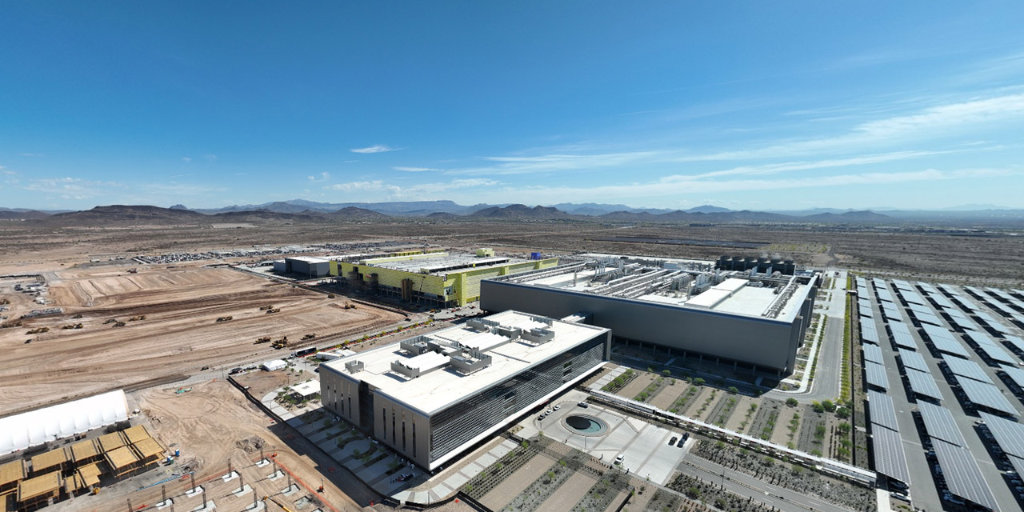
TSMC is currently expanding it’s fabrication plant in Arizona
ASML: The Monopoly Making the Machines
But wait, how does a giant like TSMC actually make these microscopic chips? They buy mind-bendingly complex machines from a Dutch company called ASML. ASML provides the extreme ultraviolet (EUV) lithography machines that fabs use to etch those microscopic chip designs into silicon wafers. Unlike the fab market where TSMC at least has a little bit of competition, ASML basically holds a total monopoly on the cutting edge of chip manufacturing processes.
There are murmurs that China might be getting close to developing its own EUV tech, but as of right now? If you want to etch a cutting-edge 2nm chip, you are absolutely using an ASML machine to do it.
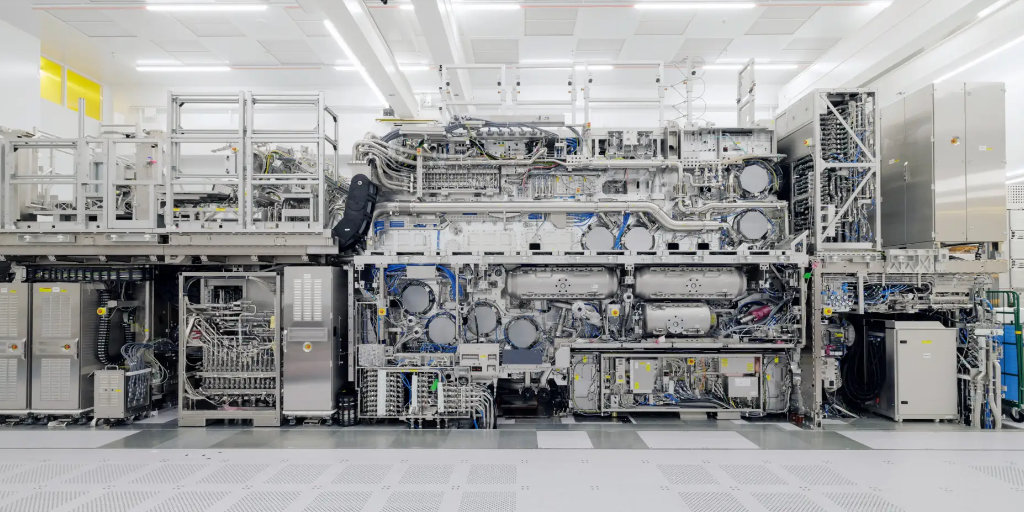
Often dubbed “The most complex machine” a high end ASML UAV machine will set you back up to $400+ million
Zeiss: Bending Light at the Bottom of the Stack
So, ASML builds the ultimate machine. We’ve hit the bottom of the rabbit hole, right? Wrong. To etch circuits so small they’re measured in single-digit nanometers, ASML’s machines have to manipulate EUV light. Because EUV light is extremely finicky and absorbed by almost everything, you can’t use traditional glass lenses to bend it. Instead, ASML requires advanced, atomic-scale accurate mirrors. And who makes these hyper-precise, impossibly flat mirrors? Zeiss. Yes, the exact same company whose logo you may have seen sitting on the side of your favorite pair of sunglasses or your camera lens.
When you peel back the final layers, Zeiss might just provide the most vital piece of the entire manufacturing process. By mastering the fundamental, atomic-level science of bending light, Zeiss is the hidden wizard actually pulling the strings of the global tech economy, and that is where all of our chips truly come from.
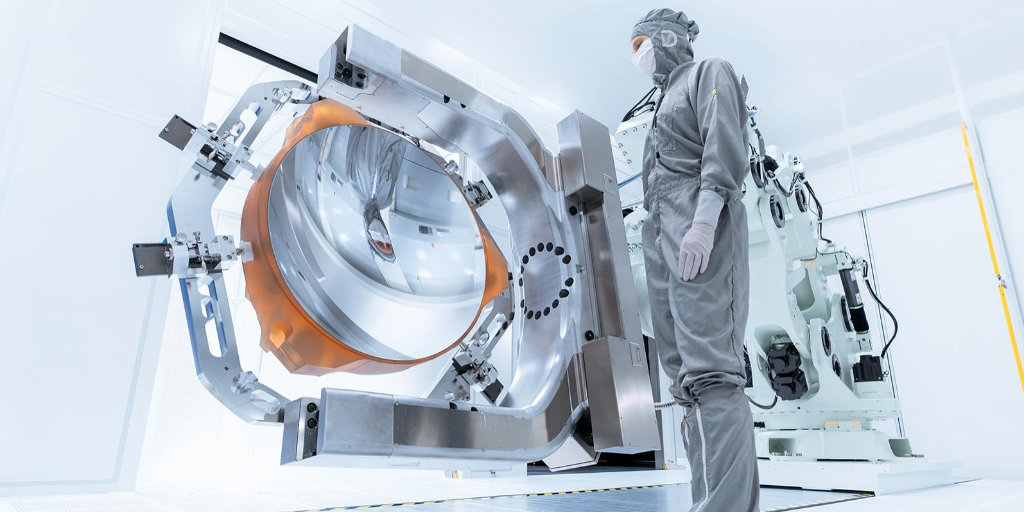
That’s not the latest NASA satellite, it’s one of Zeiss’s ultra-precise mirrors.