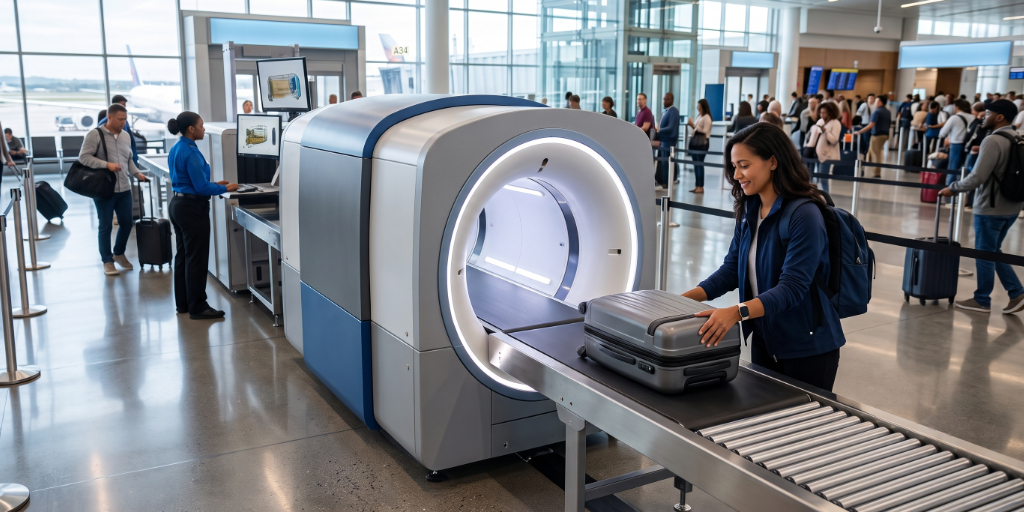
If you’ve traveled anywhere by plane in the last two and a half decades, you’ve personally experienced the absolute joy that is American airport security. The Transportation Security Administration (TSA) was hastily formed as a direct response to the September 11 terrorist attacks, and airport security as we know it has never been the same since. For 25 years, we’ve endured what many affectionately call “security theater.” Let’s be honest: TSA security is almost a running joke at this point. It’s a chaotic, stressful dance of gray plastic bins, confused travelers, and stern agents barking orders about forgotten water bottles.
We complain about it, we dread it, and we purposefully arrive two hours early just to survive it. But for a quarter-century, we’ve all had no choice but to deal with it if we want to travel by plane. Fortunately, a massive technological upgrade is finally hitting airport terminals, promising to end the madness.
The Security Drill We All Know
Before we look to the future, let’s quickly review the grueling obstacle course that is the current TSA security protocol. We all know the drill by heart, yet it somehow induces panic every single time. As you approach the conveyor belt, you have to aggressively dig through your carefully packed carry-on to separate your tablets and laptops. You have to ensure every last liquid is packed in a container under 100ml. You frantically empty your pockets of loose change, keys, and that random pack of gum before you step into the scanner.
And, of course, don’t forget to take off your shoes and shuffle across the cold, questionable airport floor. Oh, wait, you actually don’t have to do that anymore! In a rare win for common sense, the TSA dropped the mandatory shoe-removal rule for standard travelers. But aside from keeping our footwear on, the rest of the exhausting security drill has stayed exactly the same, creating the familiar bottleneck we all dread.
While a bit exaggerated, this comedy sketch sums up the feeling of airport security nicely.
The 3D Magic of Computed Tomography
Enter the computed tomography (CT) X-ray machine. This isn’t just a slight cosmetic upgrade; it’s a complete technological overhaul of how your luggage gets inspected. Using advanced algorithms, these slick new machines enable TSA agents to view and seamlessly manipulate a 3D model of a carry-on bag’s contents versus a static image that a traditional X-ray machine provides. This is a massive leap forward.
Better yet, because the imaging is so incredibly precise, you don’t need to disassemble your bag like a pit crew at a race track before sending it through the scanner. You can leave all of your liquid, tablets, ebooks, and laptops right where they belong—safely tucked inside your luggage. These new machines eliminate one of the largest security pain points in one fell swoop.
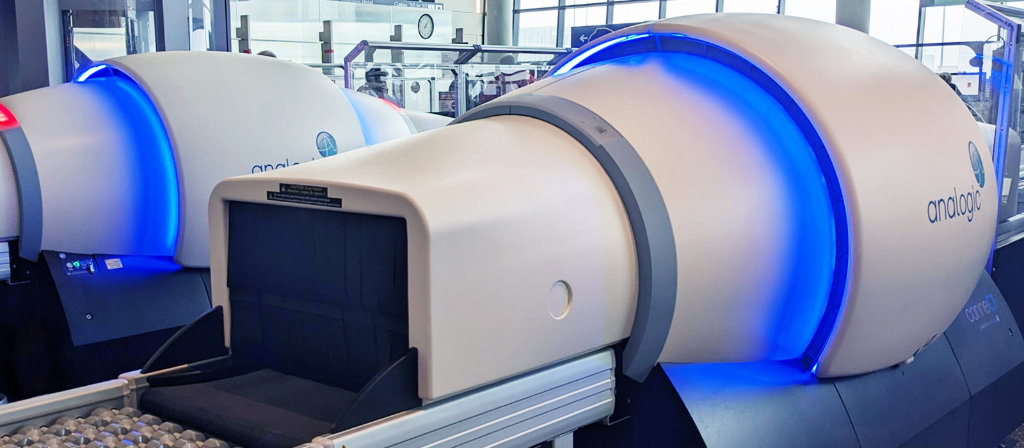
The new CT scanners look decidedly more space-age than their older counterparts
The Catch: Rollout Status and Caveats
While this sounds like an absolute dream for frequent flyers, here’s an update on the current state of CT scanners in airports: we aren’t completely out of the woods quite yet. Right now, most airports either don’t use the new CT scanners, or they have one or two of them, with the rest of the security lines still relying on the antiquated X-ray machines. CT scanners are massive, bulky, and wildly expensive machines, so the system-wide rollout will not happen overnight.
Another caveat is the physical design of the machines themselves. The new CT scanners have slightly smaller entry tunnels than their predecessors, so oversized bags may not actually fit. However, if you’re actually following the airline’s official carry-on guidelines instead of trying to smuggle a giant duffel bag through, this shouldn’t be a problem.
Hopefully, as funding continues and more machines come online, it won’t be long until airport security is dramatically smoother as a result of new tech, and a little more common sense.